
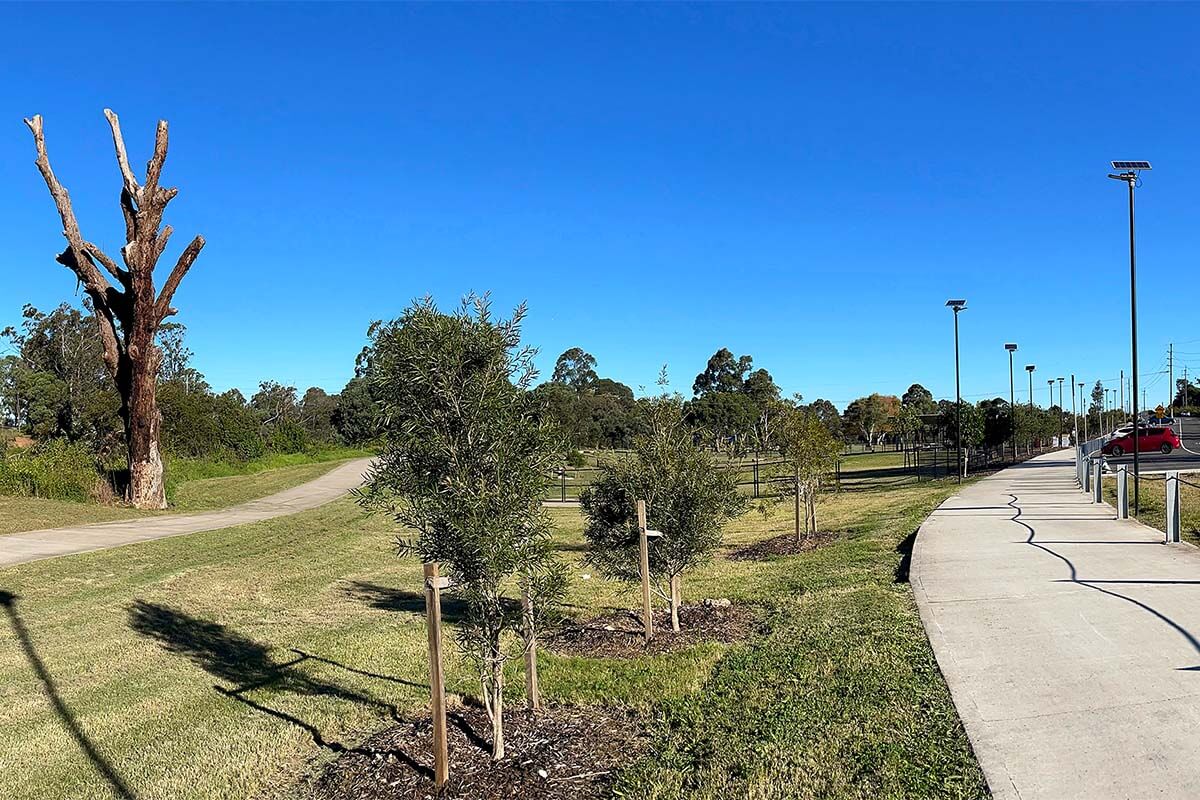
In 2019, Liverpool City Council was one of 20 councils successful in securing a share of $5.3 million in grant funding to deliver more trees across Greater Sydney.
Liverpool City Council had the bold idea to transform an old golf course into a welcoming and exciting recreational space in Georges River Casula Parklands for residents and visitors to enjoy.
Described as a well-hidden parkland, the space has been transformed with a regional adventure playground, picnic areas, other recreational facilities and improved amenity. The development of the area also complemented the existing regional cultural facility of Casula Powerhouse Arts Centre, situated at the southern end of the parklands. Tree planting was an important element in the parkland development as it was designed to improve comfort levels for visitors and the overall look of the park, as well as increase biodiversity.
As part of the grant for this project, the Department funded 210 trees to be planted at Georges River Casula Parklands with many mature trees planted to give an immediate uplift to the area. As the parklands sit within the Georges River corridor, it was essential that the new tree planting supported the existing vegetation community and habitat. The majority of the tree species planted in the parklands were therefore native.
The activation of this once hidden parkland has transformed it into a destination for play, expected to increase civic pride and a sense of ownership within the community. Pride of place and active use will further drive community support for the ongoing maintenance and care of this valued place to love.
The planting at Georges River Casula Parklands has supported council’s vision for a greener Liverpool by providing attractive spaces that enhance health and wellbeing of the community, while improving the conservation at the site.
It also supports the integration of tree planting into recreational parks, which will provide shade – reducing the heat island effect in southwest Sydney.
Wendy Waller, Mayor of Liverpool 2016–21
Tree selection
- The majority of trees were native tree species such as Weeping Bottlebrush and Queensland Brush Box, with a small selection of exotic tree species such as Claret Ash and different cultivars of Crepe Myrtle.
- Council planted a variety of trees ranging from 400 mm pot to 200 L mature trees. Most trees were semi-mature or mature to give an immediate visual and environmental lift to the area.
- Most trees were native species to support the existing vegetation as the parklands sits in the Georges River corridor. These natives will provide a food source for birdlife and as they mature will provide much needed shade for visitors to the area.
- A smaller selection of exotic species was also planted to enhance the visitor experience with seasonal interest such as spring blossoms and autumn foliage colours.
Tree establishment period
- Liverpool City Council ensured a successful 18-month tree establishment period as part of the grant conditions. This was an important component of the grant program as the first 18-months is critical to the ongoing life of the trees.
- Weeding and general repairs of tree stakes and ties were conducted on a monthly basis.
- The project achieved a 100% survival rate to date.
- Today, the trees continue to grow to provide more shade canopy, improve public amenity, attract wildlife and reduce urban heat.
Timeline
-
Date of planting
June 2020
-
Start of establishment period
September 2020
-
End of tree establishment period
February 2022
-
Ongoing routine maintenance by council
February 2022 onwards