
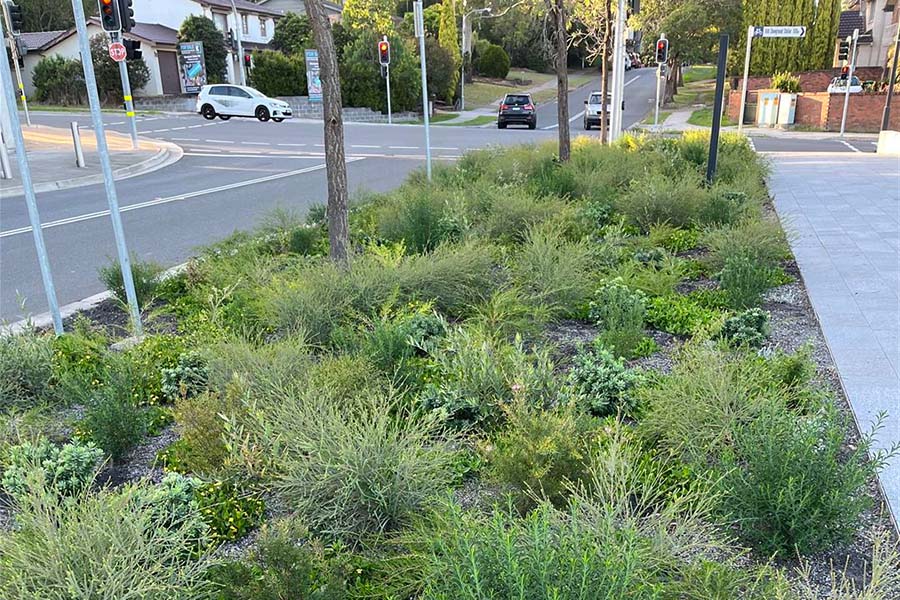
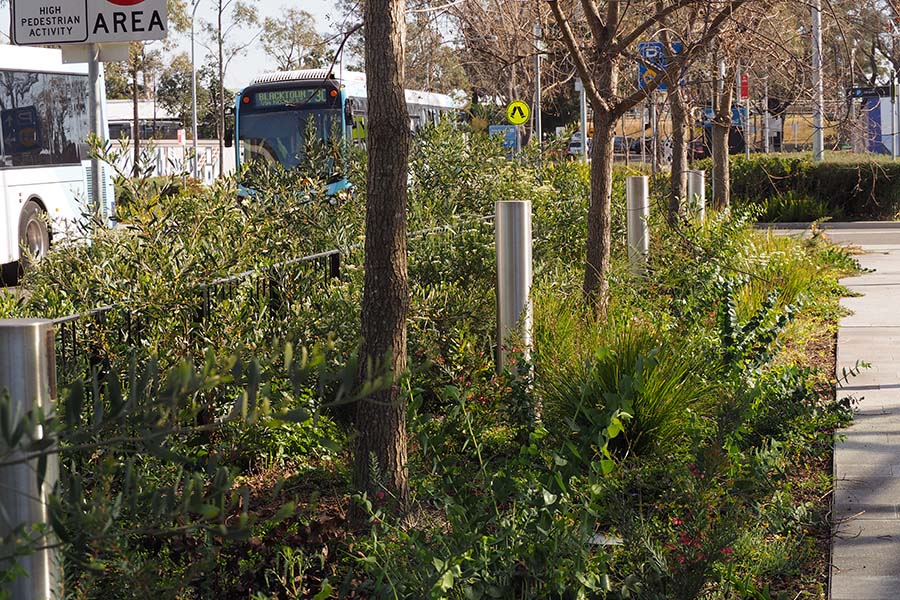
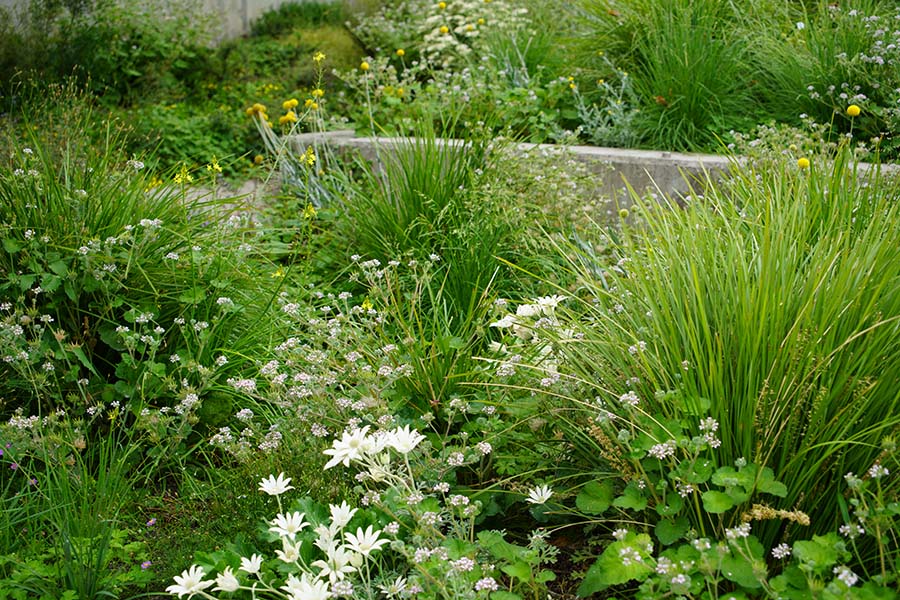
The Sydney Metro planting trials show how diverse, seasonal, and captivating planting can be achieved in urban plazas. This has resulted in the planting of 1,000 m2 of biodiverse naturalistic plant communities.
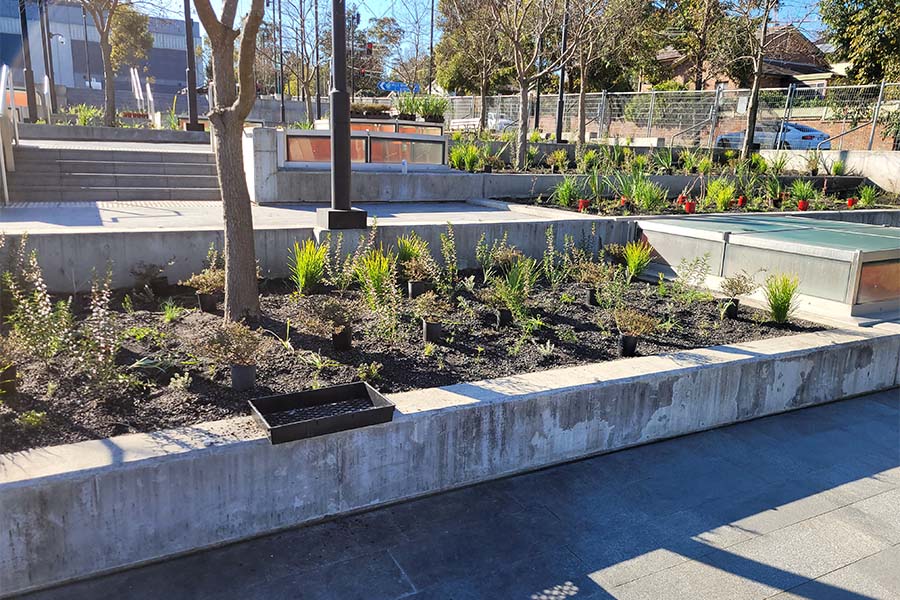
The flowering and layered planting includes more than 100 Australian and exotic plant species suitable for the Sydney region. Previous planting on the site had failed due to issues with drainage and soils. Given the need to restore the planting, an opportunity was created for a trial study.
Sowing the seeds for urban biodiversity
The Hills Metro Station is now buzzing with people and pollinators. Design of the planting trials focused on planting outcomes that were 'naturalistic' in layout and aimed to achieve a 3-layered structure (base, middle and upper layer) to increase habitat value and reduce maintenance. Trial mixes for minimal maintenance and maximum flowering time were used to improve public perception and provide pollinator resources.
Compared to standard industry practice and adjacent streetside plantings, the trials have significantly increased vegetation and floral display over the first 2 years of monitoring.
Lessons and collaboration
Consideration of the microclimate, site conditions, soil properties in particular fertility and drainage during the design is essential for planting success. Care is needed in designing plant mixes that balance plant types and growth rates. The recommended plant density is 10 plants per square metre to achieve canopy closure and weed suppression. Pot sizes which range from 50 mm to 200 mm are desirable, with evidence attributing faster growth to smaller pot sizes.
Installation of planting and seeding should aim to occur in September or May to allow plants the best chance to establish in optimal growing conditions.
Ongoing care and maintenance especially during establishment is an important requirement for success. This involves the removal or pruning of aggressive and overly dominant plants including grasses and perennials to reduce densities. Pruning of shrubs to a height of 12 cm above the ground in early spring assisted with the ongoing success of the planting with all plant material removed from the site.
Weeding, mulching and watering is important. At planting the addition of a 5 cm layer of mineral mulch was applied to reduce weeds with weekly hand watering during establishment to supplement the existing irrigation system.
It helps to establish a pre-grow contract to procure plants and ensure plant species are available. Establish a plan and a clear process for monitoring and documenting changes in plant growth. Conducting invertebrate surveys prior to planting can also assist in measuring biodiversity outcomes.
Substituting non-natives aided in filling the gaps during the year when natives are not flowering to allow nectar and pollen resources for insects and birds all year round.
Visit Sydney Metro for further information about the Hills Showground planting trial.