Save time with a fast-tracked assessment
Projects that use a pattern book design may be able to access a complying development pathway and reduce assessment approval time by up to 50%.
The patterns can be used across NSW where these low- and mid-rise housing types are already permitted with consent. This includes areas where the recent Low- and Mid-Rise Housing Policy and Transport Oriented Development (TOD) reforms apply.
Each design will come with a set of architectural drawings and instructions for customising the pattern to your sites and preferences. Confirm with your local council if there are additional requirements for your planning application.
Before submitting your application, an architect or building designer must prepare and sign a verification statement that confirms the submission complies with the NSW Housing Pattern Book requirements.
We’ve prepared a step-by-step guide to help you prepare for the lodgement of your planning application.
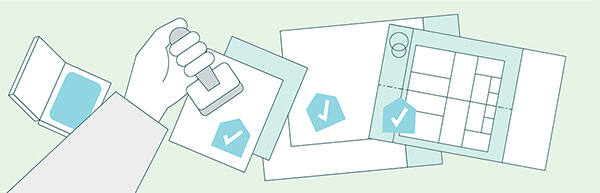
Complying development can be determined through fast-track assessment by a council or an accredited certifier. A Complying Development Certificate (CDC) is a combined planning and construction approval. This pathway requires more detailed architectural drawings and additional documents to support construction approval.
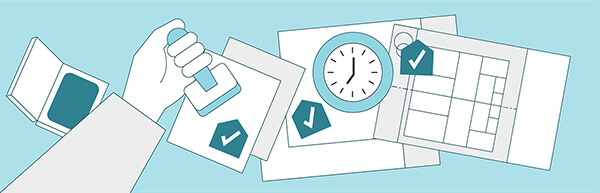
While all patterns are eligible for fast-tracked assessment, not all sites are. A standard development application (DA) may be suitable for more complex sites, such as sites in bushfire- or flood-prone land, where additional assessment is required from the local council.
Step-by-step guide to lodging your pattern planning application
Follow these 5 steps to gain planning approval using the complying development pathway.
-
Explore patterns and engage a designer
Browse the NSW Housing Pattern Book and choose a pattern that suits your site and requirements. Hire an architect or building designer to support you through the process.
-
Adapt the pattern to your site and preferences
Customise the design using the available adaptations to suit your site and preferences. Design adaptations may include options for internal layouts, a selection of material palettes and modifications for a gently sloping site.
-
Prepare your application documents
Your local council can confirm which drawings and supporting information you need to submit with your planning application. Your designer will help you prepare the required documentation and sign the NSW Housing Pattern Book Design Verification Statement. A signed statement must be submitted with your application.
-
Lodge your planning application
All planning applications in NSW must be lodged through the NSW Planning Portal. When you prepare your planning application, you will be asked if your application is a pattern book development to speed up the assessment process.
-
Get fast-tracked approval
Once you have been given planning consent, you can start the construction process. Speak to your designer about the next steps in your pattern book project.
Relevant legislation
The NSW Housing Pattern Book is enabled by legislation which came into effect from July 2025.
The relevant legislation is has been implemented through amendments to the State Environmental Planning Policy (Exempt and Complying Development Codes) 2008 and the Environmental Planning and Assessment Regulation 2021.
Discover design features
Get expert advice to help manage your budget and reduce risks.
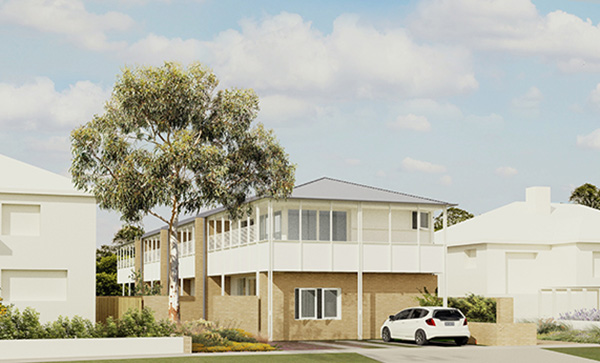
Explore the range of available pattern designs before you commit.
Frequently asked questions
Frequently asked questions about the fast-tracked planning pathway for the NSW Housing Pattern Book.
Applicants may choose to use the complying development pathway under the newly introduced Pattern Book Development Code 2025, or a standard development assessment if the development type in the pattern designs is permissible with consent and the site is eligible.
Councils can assess pattern book developments submitted as complying development under the newly introduced Pattern Book Development Code 2025, or using the standard development assessment pathway. Applications for complying development for pattern book developments can be made from July 2025.
Pattern book developments that comply with pattern-specific development standards, location requirements, and technical drawing sets are eligible for assessment as complying development under the Pattern Book Development Code 2025. This gives members of the public, the construction industry, and councils time to prepare for the low-rise pattern designs.
A private certifier can assess pattern book developments that use a complying development pathway under the newly introduced Pattern Book Development Code 2025.
Applications for complying development for pattern book developments can be made from July 2025. This gives members of the public, the construction industry, and councils time to prepare for the low-rise pattern designs.
Pattern book developments that comply with pattern-specific development standards, location requirements, and technical drawing sets are eligible for assessment as complying development under the Pattern Book Development Code 2025.
You may still be able to use the pattern designs if the development type, such as dual occupancy, is permitted with consent to lodge a standard development application. This includes sites that are ineligible for complying development, such as sites on bushfire- or flood-prone land.
Patterns lodged for a standard development application (DA) will be subject to a full merit assessment by local councils and will require an additional application to certify construction drawings following DA approval (known as a construction certificate).
Yes, concurrent subdivision and pattern book complying development applications are possible under a single complying development certificate. Alternatively, you can apply for the pattern book complying development certificate now, and for the subdivision (either Torrens title or strata subdivision) later, also as complying development.